Categories
Watercolor Techniques

Watercolor Technique Textural Effects

Watercolor Technique – Textural effects are elements that are added to a watercolor composition to give it detail and depth, simulating textures found in nature and man-made objects.

Why Texture Matters in Watercolor Painting

Texture in watercolor is more than surface decoration. It is a visual tool that adds realism, contrast, movement, and emphasis within a composition. Textural effects help describe surfaces such as stone, bark, foliage, fabric, or weathered structures, and they guide the viewer’s eye through the painting.

Used thoughtfully, texture can:

  • Reinforce the illusion of form and depth
  • Create contrast between soft and hard passages
  • Add energy and interest to large washes
  • Strengthen focal points while allowing other areas to remain calm

Balancing textured areas with smoother passages prevents a painting from feeling visually overcrowded.

Choosing the Right Watercolor Paper for Textural Effects

The surface of the paper plays a major role in how textural techniques appear.

  • Rough paper enhances drybrush, granulation, salt, and sgraffito effects because of its deep surface texture.
  • Cold press paper provides a balance of texture and control, making it suitable for most textural techniques.
  • Hot press paper has a smooth surface that minimizes texture; effects such as lifting and controlled spattering work best here.

For techniques involving lifting, scratching, or repeated layering, 100% cotton watercolor paper is more durable and resists surface damage better than cellulose paper.

Understanding Watercolor Wetness Stages

Timing is critical when creating textural effects. The same technique will behave differently depending on how wet the paper is.

  • Very wet (shiny surface): Paint spreads freely; ideal for blooms, dropped pigment, and soft transitions.
  • Damp (matte sheen): Best for salt effects, gentle lifting, and controlled sgraffito.
  • Nearly dry: Produces crisp drybrush marks, defined sponging, and sharp streaking patterns.

Learning to recognize these stages helps ensure consistent and predictable results.

Textural Effect Methods

Drybrush

Drybrushing is painting with an almost dry or slightly damp brush loaded with a small amount of paint. The side of the brush is applied lightly over the surface of the paper in quick strokes. Paint only touches the raised “bumps” of the paper texture, leaving a grained effect with white spaces between.

The drybrush textural effect is useful for depicting rough stones, wood grain of an old wooden building, the sparkle of sunlight on water, etc.

Drybrush Control Tips

  • Use a stiff-bristled brush for stronger texture.
  • Work on rough or cold press paper for maximum effect.
  • Avoid overloading the brush with water to preserve broken marks.

Granulation

Granulation is painting with watercolor paints that have grainy pigment particles. Some watercolor pigments are naturally coarse. Their granular particles settle into the depressions of textured watercolor paper, leaving a mottled effect. Mixing granulated watercolor with non-granulated watercolor will produce interesting two-color textures.

Following are Winsor Newton watercolor paints that are classified as granulated colors:

Granulation and Pigment Behavior
Granulation is most visible on textured paper and becomes more pronounced when paint is diluted and allowed to settle naturally. Combining granulating pigments with smooth, non-granulating pigments can create layered color variations that add visual complexity.

Lifting

Lifting is applying absorbent material to a damp painted area to lift off the color and show the white of the paper beneath. The shapes of soft clouds in the sky can be achieved using the lifting textural effect. This technique is also used to create highlights on a painted object. Tissue paper, paper towels, or Q-tips can be used for lifting.

Best Pigments for Lifting
Non-staining, transparent pigments lift more easily than heavily staining colors. The success of lifting also depends on the quality of the paper and how long the paint has dried.

Salt

The “Salt” technique involves applying salt to a damp painted area that is then left to dry before removing the salt. Each salt crystal absorbs the water from the wet watercolor paint on the paper surface it touches, leaving light star shapes. The paper should be left to dry completely before brushing off the salt.

Salt Technique Tips

  • Apply salt when the paper is damp, not dripping wet.
  • Different salt sizes produce different effects.
  • Remove salt only after the paper has fully dried to avoid smearing pigment.

Sgraffito

Sgraffito is applying a palette knife’s edge to a wet painted area to scratch out the watercolor, leaving light marks on the paper. This technique is used to create highlights in a painting. The shapes of the highlights need to be simple, and they work best with transparent, non-staining watercolors.

Sgraffito Considerations
Use gentle pressure to avoid damaging the paper surface. Sgraffito is most effective when used sparingly and placed intentionally near focal areas.

Spattering or Dropping

Spattering is applying watercolor by flicking paint off of a brush to create random spatters of watercolor on the paper surface. Dropping is applying watercolor by allowing droplets of paint to fall from the tip of the brush onto the paper surface.

Spattering Control Tips

  • Adjust brush size and paint consistency to control droplet size.
  • Mask areas that should remain clean.
  • Test spatter on scrap paper before applying it to a finished painting.

Sponging

Sponging is applying watercolor with a sponge instead of a brush. The texture of the sponge imprints patterns onto the surface of the paper. A variety of textural patterns can be achieved using one or more colors layered with a sponge. This textural effect can be used for depicting foliage, masonry on a building, rocky crags, etc.

Sponging for Layered Texture
Natural sponges create irregular patterns, while synthetic sponges offer more control. Allow each layer to dry before adding another for increased depth.

Streaking

Streaking is pressing aluminum foil or plastic wrap that has been crushed to form creases and wrinkles on top of the paper surface that is still damp with watercolor paint. The aluminum foil or plastic wrap is left on the paper surface until the watercolor paint has dried. When the foil or wrap is lifted off the paper, the creases and wrinkles will be imprinted on the dried watercolor paint, leaving a streaking textural effect with sharp lines and dark-and-light patches.

Best Uses for Streaking
This technique works well for abstract backgrounds, rock formations, and dramatic atmospheric effects.

Combining Textural Effects in One Painting

Using multiple textural techniques together can create richer and more realistic surfaces. For example:

  • Granulation combined with drybrush for stone or weathered walls
  • Sponging layered with drybrush for foliage
  • Salt followed by selective lifting for complex sky textures
  • Spattering over smooth washes to break up flat areas

Allow each layer to dry before adding the next to maintain clarity.

When to Use Texture—and When to Restrain It

Not every area of a painting needs texture. Overusing textural effects can overwhelm a composition. Smooth washes provide visual rest and help textured passages stand out. The strongest textures are most effective when placed near focal points.

Common Mistakes When Using Textural Effects

  • Applying techniques at the wrong moisture stage
  • Overworking lifted areas until the paper surface is damaged
  • Using salt on paper that is too wet, resulting in muddy effects
  • Scratching too deeply during sgraffito
  • Applying spatter without protecting important areas

Awareness of these issues helps prevent frustration and improves results.

Practice Exercises for Textural Effects

A useful way to explore texture is through practice swatches:

  • Create a drybrush texture sampler
  • Test salt at different moisture stages
  • Compare granulating and non-granulating pigments
  • Label each experiment with notes on timing, pigment, and paper

Regular practice builds confidence and control when applying textural effects in finished paintings.

Categories
Color Schemes

Watercolor Schemes Triadic

Watercolor schemes – Triadic is a color scheme using three colors on the color wheel. To locate a Triadic scheme on the color wheel, an equilateral triangle could be drawn with each of its points pointing to three equidistant colors forming a triad chord.

There are four triad color groups on a color wheel, as follows:

  • Primary Triad – Yellow > Blue > Red
  • Secondary Triad – Green > Purple > Orange
  • Tertiary Triad #1 – Yellow-Green > Blue-Purple > Red-Orange
  • Tertiary Triad #2 – Blue-Green > Red-Purple > Yellow-Orange

For corresponding watercolor paint names for the above see What Watercolors To Buy.

NOTE: The hue PURPLE is labeled as the color VIOLET by most watercolor paint brands.

The Primary Triad color scheme allows for mixing all of the Secondary and Tertiary colors using the Primary colors Yellow, Blue and Red.

All of the Triad groups allow for an almost endless array of colors, neutrals, and grays by varying the proportion of each color mixed.

In a composition, make one of the triad colors the main color. Add interest by mixing small amounts of one of the other triad colors into the main color to create neutrals and grays. Add accents using the remaining triad color. Place two of the triad colors side-by-side or near each other at the focal point of the composition to draw the viewer’s eye to the center of interest.

Why Triadic Watercolor Schemes Feel Dynamic

Triadic color schemes are visually dynamic because the colors are evenly spaced around the color wheel. This spacing creates a sense of balance combined with lively contrast, encouraging the viewer’s eye to move throughout the composition without feeling chaotic.

In watercolor painting, this effect is enhanced by:

  • Transparent washes that allow colors to visually mix on the paper
  • Soft edges and blooms that naturally harmonize contrasting hues
  • Granulating pigments that add texture while maintaining color balance

Because of this, triadic watercolor schemes are especially effective for expressive landscapes, florals, still lifes, and abstract compositions.

Value Control in Triadic Watercolor Painting

When working with three equally spaced hues, value control becomes more important than color choice. Without strong value structure, a triadic painting can feel busy or overwhelming. Use a gray scale to determine a color’s tonal value.

To maintain harmony:

  • Assign one triad color a light value, one a middle value, and one a dark value
  • Use diluted washes for secondary and supporting colors
  • Reserve the strongest saturation and contrast for focal points

Careful value planning allows the triadic scheme to feel cohesive while retaining its natural energy.

Mixing Neutrals and Grays Using Triadic Colors

Triadic color schemes are particularly effective for mixing rich, luminous neutrals.

  • Mixing two triad colors produces warm or cool grays depending on which color dominates
  • Mixing all three triad colors creates complex neutrals with depth and variation
  • Introducing the third color gradually helps control temperature and avoid overmixing

These neutrals often appear more vibrant and natural than premixed gray paints, especially in watercolor.

When to Choose a Triadic Color Scheme

Triadic watercolor schemes are an excellent choice when:

  • A composition includes multiple areas of interest
  • You want more flexibility than a complementary color scheme
  • The subject benefits from varied color relationships without strong opposition

Compared to complementary schemes, triadic schemes offer greater range while still maintaining harmony.

Common Mistakes With Triadic Watercolor Schemes

Avoid these common pitfalls when working with triadic color schemes:

  • Using all three colors at full saturation
  • Giving each color equal visual dominance
  • Overmixing until colors become dull or muddy
  • Ignoring temperature differences within each hue

A simple guideline is to feature one color, support with one, and accent with the third.

Pigment Behavior and Triadic Harmony

Pigment characteristics play a significant role in the success of a triadic palette.

  • Granulating pigments create softer, atmospheric triads
  • Staining pigments produce bold, modern color relationships
  • Opaque pigments tend to mute contrasts and create earthy triads

Understanding pigment behavior helps maintain clarity and harmony when mixing and layering washes.

Compatible Triadic Watercolor Palettes

Ideal Subjects for Triadic Watercolor Schemes

Triadic schemes work particularly well for:

  • Florals with varied petal and foliage colors
  • Urban and street scenes
  • Still lifes featuring multiple materials or surfaces
  • Skies, water, and expressive natural scenes

These subjects benefit from the balance and movement inherent in triadic color relationships.

Categories
Watercolor Techniques

How To Use Color For Shadowing And Contrast

This blog post addresses the question “How to use color for shadowing and contrast?” asked by a student in my Watercolor Mini-Course.

Every object placed in daylight or artificial light will cast shadows and have shadows. The shadows vary according to the time of day or the direction of the light, and if the light is diffused by clouds in the sky or nearby objects. Contrasts between the object and its shadows are the differences between the tonal values dark and light, color temperatures warm and cool, and complementary colors.

Color In Shadows

There are three distinct shadows visible when objects are lit by direct light, they are:

  • Core Shadow – the dark band visible where light and shadow meet at the point where light no longer reaches the object
  • Reflected Light – the light that bounces off the surface of nearby objects and reflects back onto the object
  • Cast Shadow – the shadow created by the object itself blocking the light on the surface the object rests on
color in shadows

The above image illustrates the core shadow, reflected light and shadow, and the cast shadow of the banana. The bright light source creates a strong contrast of light and dark tonal values, in color contrast of warm and cool colors, and in the contrast of two complementary colors – Yellow < > Purple < or > the split-complement Blue-Purple.

How the Light Source Affects Shadow Color

The color seen in a shadow is not created by the object alone—it is strongly influenced by the color temperature of the light source.

  • Warm light (late afternoon sun, incandescent bulbs) produces cooler shadows
  • Cool light (overcast skies, north-facing light, fluorescent lighting) produces warmer shadows
  • Artificial indoor lighting can introduce unexpected shadow colors such as blue-violet, green, or muted reds

Understanding the light source explains why shadows naturally shift toward complementary or split-complementary colors rather than appearing gray or black.

Contrasting Colors

Think opposites:

  • warm < > cool color temperature
  • dark < > light tonal value
  • color < > complementary color

The color Yellow in the banana has a warm temperature, a light tonal value, and is the complementary color opposite the Purple visible in the shadow.

The color Purple in the cast shadow of the Yellow banana has a cool temperature, a dark tonal value, and is the complementary color opposite of Yellow.

Local Color vs. Perceived Color in Shadows

Local color is the true color of an object under neutral light.

Perceived color is how that color changes due to light direction, shadow, reflected light, and surrounding colors.

In watercolor painting, shadows rarely contain black or gray. Instead, they contain:

  • Modified versions of the object’s local color
  • Reflected colors from nearby surfaces
  • Cooler or warmer shifts based on the light source

This is why shadows feel more believable when they are painted with color rather than neutral mixes.

Reflected Color Inside Shadows

Shadows are not flat or uniform. The reflected light within a shadow often contains color from surrounding objects.

For example:

  • A yellow object near a red surface may reflect red into its shadow
  • A white object near grass may reflect green into its shadow
  • Reflected light is usually lighter and warmer than the core shadow

Careful observation of reflected color adds realism and depth to watercolor paintings.

Hard and Soft Shadow Edges

Hard and soft edges tell the viewer how strong or diffused the light source is.

  • Hard edges indicate strong, direct light and higher contrast
  • Soft or lost edges indicate diffused light or atmospheric conditions
  • Cast shadows often have a sharp edge closest to the object and soften as they move away

In watercolor, controlling edge softness depends on timing, paper moisture, and brush control.

How to Create Shadows

Observation and understanding of color is key.

Use this Color Wheel page as a resource to find my blog posts about the 12 colors on the color wheel and their color schemes.

Look closely at the object to be painted, and determine its dominant local color.

Look closely at the object’s cast shadow, and determine what complementary color it is.

  • Yellow < > Purple
  • Yellow-Green < > Red-Purple
  • Green < > Red
  • Blue-Green < > Red-Orange
  • Blue < > Orange
  • Yellow-Orange < > Blue-Purple

For corresponding watercolor paint names for the above see What Watercolors To Buy.

NOTE: The hue PURPLE is labeled as the color VIOLET by most watercolor paint brands.

Chromatic Shadows vs. Neutral Shadows

There is more than one correct approach to painting shadows.

  • Chromatic shadows (using complements or split-complements) appear luminous and expressive
  • Neutralized shadows (mixing complements to gray) feel subtle and realistic

Your choice depends on the subject, lighting conditions, and mood you wish to convey.

Value Does More Work Than Color

While color enhances realism, value establishes form.

  • A shadow must always be darker than the local color to read as a shadow
  • Even if the hue varies, correct value relationships create believable depth
  • When in doubt, check value first, color second

Watercolor Techniques for Painting Shadows

Use transparent watercolors and/or semi-transparent watercolors, never opaque or semi-opaque watercolors. Why? Because shadows are transparent. You can see the color of the surface beneath the shadow.

For the best results when painting shadows:

  • Build shadows gradually using glazing and layering
  • Allow each layer to dry before applying the next
  • Preserve lighter reflected light areas inside the shadow

Common Mistakes When Painting Shadows

  • Using black or gray straight from the tube
  • Making all shadows the same color
  • Ignoring reflected light
  • Painting shadows too dark too early, leaving no room to glaze

Avoiding these habits leads to more convincing and luminous watercolor paintings.

Practice Exercise: Understanding Shadow Color

Try this simple exercise:

  1. Paint one object under warm light with cool shadows
  2. Paint the same object under cool light with warm shadows
  3. Change the background color and observe how reflected light alters the shadow

This exercise strengthens observation skills and reinforces how light, color, and value work together.

Categories
Color Schemes Watercolor Paint

Cadmium Orange

In the past, I used Cadmium Orange as the tertiary yellow-orange on the color wheel. It is a pure color that is perfect for its complementary color listed below. But, there are newer paint color alternatives that I prefer now. They are Transparent Orange and Cadmium-Free Orange. Why? Because Cadmium paints are toxic. So, I avoid using them.

Understanding Cadmium Orange on the Palette

Cadmium Orange is known for its strong chroma and distinctly opaque nature. Unlike transparent watercolor pigments that allow light to pass through the paint layers and reflect back from the paper, Cadmium Orange blocks light. This opacity causes the color to sit more heavily on the paper surface, which affects both layering and mixing.

Because of this, Cadmium Orange does not glaze well and can quickly dull mixtures when combined with transparent pigments. While it produces bold, solid color in a single layer, it often lacks the luminosity that many watercolor artists seek in modern transparent palettes.

Cadmium Orange vs. Modern Transparent Alternatives

Advances in pigment technology have made it possible to achieve vibrant orange hues without the drawbacks of cadmium paints.

  • Transparent Orange offers high chroma with excellent transparency, making it ideal for glazing, color layering, and clean mixes.
  • Cadmium-Free Orange provides a similar visual warmth to Cadmium Orange without the toxicity, though it may differ slightly in intensity or undertone depending on the manufacturer.

These modern alternatives support luminous watercolor techniques while maintaining safety and versatility in the studio.

Temperature and Color Bias of Cadmium Orange

Cadmium Orange is a warm orange with a noticeable yellow bias. This warmth influences how it behaves in mixes:

  • Mixed with blues or blue-violets, it tends to create muted neutrals rather than vibrant secondaries.
  • When combined with yellows, it produces strong, earthy yellow-orange passages.
  • With reds, it can quickly overpower the mixture due to its opacity.

Understanding this color bias helps predict results and avoid muddy mixes.

Color Schemes Using Cadmium Orange

The following color schemes are based on Stephen Quiller’s “Quiller Color Wheel” and his book “Color Choices: Making Color Sense Out of Color Theory.

Complementary

The complementary color sits on the opposite side of the color wheel. For Cadmium Orange, the complementary color is:

Split-Complementary

The split-complementary colors are the two colors located on either side of the complementary color on the color wheel. The following are the split-complementary colors for Cadmium Orange:

Analogous

Going clockwise on the color wheel from YELLOW-ORANGE to YELLOW-GREEN the analogous colors for Cadmium Orange are:

Triadic

This Triadic consists of three INTERMEDIATE colors. In addition to Cadmium Orange, the other colors that make up this Triadic color scheme are:

Opacity, Mixing, and Layering Effects

Because Cadmium Orange is opaque, it can flatten underlying washes when layered on top of transparent colors. This characteristic makes it less suitable for traditional watercolor glazing techniques but more appropriate for:

  • Single-layer applications
  • Flat color areas
  • Graphic or illustrative styles

In contrast, transparent oranges maintain color harmony and optical depth when layered.

Lightfastness vs. Watercolor Technique

Historically, cadmium pigments were prized for their excellent lightfastness, which made them attractive to artists concerned about permanence. However, permanence alone does not guarantee successful watercolor behavior.

Modern transparent pigments now offer both lightfastness and superior handling qualities, allowing artists to achieve longevity without sacrificing luminosity or clean mixing.

Safety Considerations When Using Cadmium Pigments

Cadmium paints are toxic, particularly if inhaled or ingested. While safe handling practices can reduce risk, many artists prefer to eliminate cadmium pigments entirely—especially in home studios, shared workspaces, or teaching environments.

Cadmium-free alternatives provide a safer and more practical choice for everyday watercolor use.

When Cadmium Orange May Still Be Useful

Although no longer part of my regular palette, Cadmium Orange can still be useful in limited situations, such as:

  • Painting autumn foliage or rustic subjects
  • Creating muted, earthy neutrals
  • Working in styles that favor opacity over transparency

Used thoughtfully, it can serve a specific visual purpose rather than a primary mixing role.

Categories
Color Schemes

Watercolor Schemes Split-Complementary

Watercolor schemes – Split-complementary is a color scheme using three colors on the color wheel as follows:

  • One Primary plus two Tertiary colors that sit on either side of the Primary color’s true complement, or
  • One Secondary plus two Tertiary colors that sit on either side of the Secondary color’s true complement.

To locate a split-complementary scheme on the color wheel, an isosceles triangle could be drawn with the narrowest angle pointing to a Primary color (or Secondary color). The other two points at the opposite end of the isosceles triangle would point to the two Tertiary colors forming a split-complementary harmony.

Because each of the “split” colors has some of the other primaries in them, a broader color capacity with a more pleasing harmony is achieved. This color scheme also allows for mixing a larger range of neutrals and grays by varying the proportion of each color.

In a composition, make one of the split-complementary colors the main color. Add interest by mixing small amounts of one of the other “split” colors into the main color to create neutrals and grays. Add accents using the remaining “split” color. Place two of the “split” colors side-by-side or near each other at the focal point of the composition to draw the viewer’s eye to the center of interest.

Color Wheel Split-Complements

  • Yellow > Red-Purple < > Blue-Purple
  • Blue > Red-Orange < > Yellow-Orange
  • Red > Yellow-Green < > Blue-Green
  • Green > Red-Orange < > Red-Purple
  • Purple > Yellow-Orange < > Yellow-Green
  • Orange > Blue-Green < > Blue-Purple

For corresponding watercolor paint names for the above see What Watercolors To Buy.

NOTE: The hue PURPLE is labeled as the color VIOLET by most watercolor paint brands.

Why Split-Complementary Color Schemes Work Especially Well in Watercolor

Split-complementary color schemes are particularly well suited to watercolor painting. Unlike direct complementary pairs, which can feel abrupt or overpowering, split-complements soften contrast while maintaining visual energy. Because watercolor relies on transparency and light passing through layered washes, the slightly wider spacing between hues helps preserve luminosity and reduce the risk of muddy mixtures.

This makes split-complementary palettes an excellent choice for artists who want both harmony and contrast without sacrificing clarity.

Understanding Pigment Bias in Split-Complementary Watercolor Schemes

In watercolor, pigment bias often matters more than the theoretical placement of colors on the color wheel. Two paints with the same color name may lean warm or cool, which significantly affects how split-complementary mixtures behave.

For example, a warm blue such as Ultramarine Blue will neutralize differently with yellow-orange and red-orange than a cool blue such as Phthalo Blue. Choosing pigments that lean away from the opposite split can help maintain cleaner mixes and more predictable neutrals.

This reinforces the importance of selecting artist-grade pigments intentionally when working with split-complementary schemes.

Mixing Luminous Neutrals and Grays with Split-Complements

One of the greatest strengths of split-complementary color schemes is their ability to produce expressive, luminous neutrals. By adjusting the ratio of the three colors, artists can create a wide range of chromatic grays that feel alive rather than dull.

Layering colors through glazing, instead of mixing them fully on the palette, allows light to pass through each layer and enhances depth. Water control also plays a key role, as wetter washes create softer neutralization while drier applications result in stronger, more textured color interactions.

Value Control for Strong Split-Complementary Compositions

When using a split-complementary palette, value contrast often has a greater impact than hue contrast. Keeping two of the colors closer in value while allowing one color to dominate helps maintain balance and visual flow.

Lighter washes of the split colors combined with deeper values of the dominant color can unify the painting. Reserving the strongest value contrast for the focal area reinforces the center of interest without overwhelming the composition.

Common Pitfalls When Using Split-Complementary Schemes

While versatile, split-complementary schemes can present challenges if not handled thoughtfully:

  • Over-mixing all three colors equally can result in dull, lifeless washes
  • Using all three colors at full intensity across the painting can create visual chaos
  • Poor water control may cause unintended neutralization directly on the paper

Being mindful of dominance, proportion, and water-to-pigment ratios helps avoid these issues.

Suggested Limited Palettes for Practicing Split-Complementary Watercolor

Practicing with a limited split-complementary palette helps build confidence and color intuition. Consider experimenting with combinations such as:

Each triad offers a different balance of transparency, granulation, and mixing potential.

Best Subjects for Split-Complementary Watercolor Schemes

Split-complementary color schemes are especially effective for:

  • Floral and botanical paintings
  • Atmospheric and expressive landscapes
  • Still lifes with a clear focal point
  • Semi-abstract and expressive compositions

Their balance of harmony and contrast makes them adaptable to both realistic and interpretive watercolor styles.

By understanding how split-complementary color schemes interact with watercolor pigments, water, and layering techniques, artists can use this palette with greater intention and confidence, creating paintings that feel both dynamic and unified.

Categories
Color Schemes

Watercolor Schemes Complementary

Watercolor schemes – Complementary is a color scheme using two colors that lie directly across from each other on the color wheel, such as Yellow and Purple. A straight line could be drawn connecting the two colors on the opposite sides of the wheel. They are considered complements or opposites.

Complementary pairs consist of one Primary and one Secondary color, or two Tertiary colors. One color in the pair is warm and the other is cool.

When the two complementary colors are placed side-by-side in a composition the colors intensify each other. Mixing two complementary colors together results in a neutralized color to a grayed color. A variety of neutrals and grays can be mixed by varying the proportion of one color to the other.

In a composition, make one of the complementary colors the main color. Add interest by mixing small amounts of its complement into the main color to create neutrals and grays. Add accents using the opposite color. Place the two colors side-by-side or near each other at the focal point of the composition to draw the viewer’s eye to the center of interest.

Understanding Complementary Colors and Pigment Bias

Not all complementary colors behave the same in watercolor. Individual pigments lean warm or cool, which affects how quickly they neutralize when mixed.

  • Warm complements mixed together tend to gray or brown more quickly.
  • Cool complements usually create cleaner, softer neutrals.
  • Single-pigment artist-grade paints provide more predictable results when working with complementary schemes.

Understanding pigment bias helps painters control whether a mixture becomes luminous, earthy, or subdued.

Using Complementary Colors to Create Shadows

Complementary colors are an excellent alternative to using black for shadows.

  • Shadows often contain a subtle hint of the object’s complementary color.
  • Adding a touch of purple to yellow areas or red to green foliage creates shadows that feel natural and cohesive.
  • This method maintains color harmony while preserving watercolor’s transparency.

Simultaneous Contrast in Complementary Color Schemes

Complementary colors intensify each other when placed side-by-side.

  • A small amount of orange next to blue appears brighter than the same orange used alone.
  • This optical effect allows painters to achieve strong visual impact with minimal paint.

Because of this, complementary schemes are especially effective for focal points.

Mixing Complementary Colors for Neutrals and Grays

Complementary colors can produce a wide range of neutrals.

  • Adjusting the ratio of one color to the other creates warm or cool grays.
  • These neutrals feel more connected to the painting than pre-mixed gray or black.

This approach is particularly effective in landscapes, still lifes, and architectural subjects.

Granulating vs. Non-Granulating Complementary Colors

Pigment texture plays an important role in complementary mixtures.

  • Granulating pigments can separate slightly on the paper, creating lively, textured neutrals.
  • Non-granulating pigments produce smoother, more even washes.

Choosing granulating complements intentionally can enhance skies, stone, foliage, and textured surfaces.

Glazing Complementary Colors in Watercolor

Complementary colors behave differently when layered instead of mixed.

  • Glazing one complementary color over another preserves depth and luminosity.
  • Mixing complements on the palette neutralizes color more quickly.

Glazing allows greater control over value and temperature while maintaining transparency.

Complementary Color Relationships Found in Nature

Complementary color schemes are common in natural subjects.

  • Blue skies against warm earth tones
  • Red berries surrounded by green foliage
  • Orange sunsets contrasted with deep blue shadows

Recognizing these relationships helps painters apply complementary schemes intuitively.

Common Mistakes When Using Complementary Color Schemes

Being aware of common pitfalls helps maintain color harmony.

  • Overmixing complementary colors can lead to dull or muddy washes.
  • Using equal amounts of both colors can create visual tension.
  • Establishing a dominant color is essential for balance.

Restraint and intentional placement lead to stronger compositions.

Simple Complementary Color Practice Exercise

To explore complementary color schemes:

  • Choose one dominant color.
  • Mix small amounts of its complement into the dominant color to create neutrals.
  • Use the pure complementary color sparingly at the focal point.

This exercise builds confidence and control.

Color Wheel Complements

  • Yellow < > Purple (Violet)
  • Yellow-Green < > Red-Purple (Red-Violet)
  • Green < > Red
  • Blue-Green < > Red-Orange
  • Blue < > Orange
  • Yellow-Orange < > Blue-Purple (Blue-Violet)

For corresponding watercolor paint names for the above see What Watercolors To Buy.

NOTE: The hue PURPLE is labeled as the color VIOLET by most watercolor paint brands.

Complementary vs. Split-Complementary Color Schemes

A complementary color scheme uses two colors directly opposite each other on the color wheel, creating strong contrast and visual energy.

A split-complementary scheme softens this contrast by replacing one complement with the two colors adjacent to it. This results in a more complex palette with less visual tension while still maintaining contrast.

Complementary schemes are bold and direct, while split-complementary schemes offer greater flexibility and subtlety. Both are powerful tools when used intentionally.

Categories
Color Schemes

Watercolor Schemes Analogous

Watercolor schemes – Analogous is a color scheme using three or four adjacent colors on the color wheel that share the same PRIMARY color. An analogous color scheme is harmonious because of the subtle gradation from one color to the next. Using this scheme creates a strong suggestion of illumination with its changes in value and intensity.

The analogous color scheme can become monotonous. It is best to choose one dominant color and use the remaining analogous colors to accent it. A small amount of a complementary color can also be added for variety and contrast.

Analogous Colors

  • Yellow-Orange, YELLOW, Yellow-Green, Green
  • Blue-Green, BLUE, Blue-Purple, Purple
  • Red-Purple, RED, Red-Orange, Orange

NOTE: Yellow, blue and red are PRIMARY colors.

Complementary Colors for Contrast

  • For the Yellow analogous colors use one of these complements: Blue-Purple, Purple, Red-Purple
  • For the Blue analogous colors use one of these complements: Yellow-Orange, Orange, Red-Orange
  • For the Red analogous colors use one of these complements: Yellow-Green, Green, Blue-Green

For corresponding watercolor paint names for the above see What Watercolors To Buy.

Why Analogous Color Schemes Work Especially Well in Watercolor

Analogous color schemes are particularly effective in watercolor because they support the medium’s natural transparency and optical mixing.

  • Adjacent colors flow into one another easily when painted wet-into-wet.
  • Transparent pigments layered within an analogous range maintain luminosity.
  • Color transitions appear soft and natural rather than abrupt.

These qualities make analogous schemes ideal for atmospheric effects, glowing light, and expressive color passages.

Choosing Temperature Within an Analogous Scheme

Even within a harmonious color range, temperature variation adds depth and visual interest.

  • Warm versions of a color suggest sunlight and proximity.
  • Cooler versions recede and create a sense of distance.
  • A warm dominant color balanced with cooler accents (or vice versa) prevents the painting from feeling flat.

Being intentional about warm and cool shifts strengthens realism and enhances mood.

Value Control: Preventing Flat or Overly Soft Paintings

Because analogous schemes rely on subtle hue shifts, value contrast becomes especially important.

  • Establish a clear range of light, mid, and dark values. Use a gray scale to determine color values.
  • Use darker values of the dominant color to anchor the composition.
  • Reserve lighter values for focal areas or highlights.

Strong value structure ensures the painting reads clearly even with limited hue contrast.

Best Subjects for Analogous Color Schemes in Watercolor

Certain subjects naturally lend themselves to analogous harmony:

  • Landscapes: Yellow–green–blue-green for foliage and fields
  • Seascapes: Blue–blue-green–blue-purple for water and sky
  • Florals: Red–red-orange–orange for warmth and vibrancy
  • Atmospheric scenes: Blue–purple–red-purple for twilight and shadow

Matching subject matter to the color scheme reinforces visual unity.

Pigment Selection Matters More Than Hue Labels

Not all watercolor paints behave the same, even when they share similar color names.

  • Single-pigment paints mix more cleanly within analogous schemes.
  • Granulating pigments add texture and visual interest.
  • Staining pigments intensify transitions but are difficult to lift or soften.

Choosing pigments with similar transparency and handling characteristics helps maintain harmony throughout the painting.

Using Neutrals Without Breaking Color Harmony

Neutrals do not need to come from black or gray paint.

  • Mix adjacent analogous colors together to create soft neutrals.
  • Add water rather than darker pigments to control intensity.
  • Use complementary colors sparingly to mute saturation without overpowering the scheme.

This approach preserves color harmony while increasing complexity.

Common Mistakes When Using Analogous Color Schemes

  • Giving equal importance to all colors instead of choosing a dominant hue
  • Relying on color alone and ignoring value contrast
  • Overusing the complementary accent color
  • Mixing incompatible pigments that dull the painting

Avoiding these issues keeps the scheme lively and intentional.

Practice Exercise: Analogous Color Scheme Study

  1. Choose three analogous colors plus one optional complementary color.
  2. Select a simple subject such as a leaf, sky study, or sphere.
  3. Establish light, mid, and dark values using only the analogous colors.
  4. Add the complementary color sparingly (no more than 10% of the composition).

This exercise strengthens color control and builds confidence using harmonious palettes.

Categories
Color Schemes

Watercolor Schemes Monochromatic

Watercolor schemes – Monochromatic is a color scheme using only one color in a range of tonal values that are light, medium and dark in a painting composition. Black, Neutral Tint or Payne’s Gray may also be added to darken the color and range of values. And, white space may also be planned for the composition by leaving areas of the watercolor paper unpainted.

A range of tonal values are achieved by adding more water to the watercolor paint to lighten it in stages.

Choosing the Best Color for a Monochromatic Watercolor Scheme

Not all watercolor pigments perform equally well in a monochromatic color scheme. Some pigments naturally produce a wide range of values from very light to very dark, while others have a limited value range.

Pigments such as Indigo, Payne’s Gray, Phthalo Blue, Burnt Sienna, Sepia, and Ultramarine Blue are especially effective for monochromatic paintings because they can achieve deep darks without losing color strength. In contrast, many yellow and some red pigments have difficulty reaching darker values without appearing dull or weak.

Staining pigments tend to create strong, even washes, while non-staining pigments allow for easier lifting and correction. Understanding how a pigment behaves will help you choose a color that supports your composition rather than limiting it.

Emotional Impact of Monochromatic Color Schemes

Monochromatic watercolor schemes are powerful tools for expressing mood and atmosphere. Because the viewer is not distracted by multiple hues, emotional impact is carried through value, contrast, and subject matter.

  • Blue monochromatic schemes often convey calm, quiet, or melancholy moods
  • Green monochromatic schemes suggest growth, harmony, and nature
  • Red monochromatic schemes communicate energy, drama, or tension
  • Earth-tone monochromatic schemes create warmth, nostalgia, or a sense of history

Choosing a single color intentionally allows the artist to reinforce the emotional message of the painting.

Monochromatic Composition

To be effective, a monochromatic color scheme requires a lot of planning to add variety while working with only one color.

  • Plan a source of light
  • Plan a focal point
  • Plan white areas
  • Plan dark value areas
  • Plan middle value areas
  • Plan light value areas, and
  • Plan highlights

Strong value contrast is essential in monochromatic compositions to prevent the painting from appearing flat or monotonous.

Creating Variety Through Texture and Brushwork

When working with only one color, texture and brushwork become critical design elements. Visual interest can be created by varying how the paint is applied.

  • Use wet-on-wet techniques for soft transitions and atmospheric areas
  • Use dry brush for texture, especially in light and middle values
  • Layer transparent washes to gradually build depth
  • Take advantage of granulating pigments to create natural variation

These techniques help replace the variety that would normally come from multiple colors.

Temperature Shifts Within a Single Color

Even though only one color is used, subtle temperature shifts can still occur within a monochromatic painting. Highly diluted washes often appear cooler and lighter, while more concentrated pigment tends to feel warmer and heavier.

Adding Neutral Tint or Payne’s Gray to darken a color can also affect temperature because both paint colors contain PB15-Phthalo Blue pigment. Neutral Tint may cool the mixture, while Payne’s Gray can introduce a blue bias. Being aware of these shifts helps maintain harmony while adding depth.

Value Scale

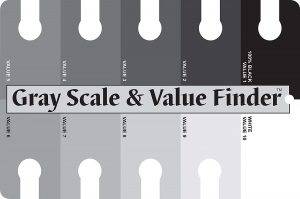
A gray scale or value finder is a helpful tool to use for showing the transitions between white to black in measuring the values of the subject and for planning the visual direction of a composition.

In watercolor painting, work from light to dark by painting the lightest values first. Middle values are added next. The final, darker tones are added last.

Painting a light value adjacent to a dark value at the focal point of the composition draws the viewers eye to that area of the painting.

Common Mistakes in Monochromatic Watercolor Paintings

Artists new to monochromatic schemes often encounter similar challenges.

  • Not pushing dark values far enough, resulting in low contrast
  • Overusing black and losing color harmony
  • Filling in too much white space
  • Keeping middle values too similar, which weakens structure

Avoiding these issues will strengthen both the composition and the overall impact of the painting.

Monochromatic Watercolor as a Skill-Building Exercise

Monochromatic watercolor painting is an excellent practice method for developing foundational skills. It encourages artists to focus on value, light direction, and composition without relying on color contrast.

These studies are often used for:

  • Value and light studies
  • Underpaintings
  • Architectural subjects
  • Atmospheric landscapes
  • Portrait practice

Mastering monochromatic schemes builds confidence and prepares artists for more complex color combinations.

When to Use a Monochromatic Color Scheme

Monochromatic schemes are not only exercises but intentional design choices. They are especially effective when the goal is unity, mood, or clarity of form.

This approach works well for:

  • Expressive studies
  • Limited palette compositions
  • Interior design and wall art planning
  • Series work where cohesion is important

A well-planned monochromatic watercolor painting demonstrates strong technical control and a deep understanding of value.

Categories
Watercolor Paint

Watercolor Paint Characteristics

Watercolor paint characteristics describe the physical qualities of color pigments. Understanding the characteristics of each watercolor will help in deciding which paints to use and how to use them for the best results.

Transparency

A transparent watercolor allows light to pass through its pigment particles and reflect back to the eyes the color of the surface the paint is applied to. The effect resembles light reflecting through colored glass.

  • The white of the watercolor paper is reflected through the first layer of transparent paint.
  • If a second layer of transparent watercolor is glazed over another, the first watercolor will reflect through the second layer causing a color change (for example, a transparent blue painted over a transparent yellow will result in a green color).

Transparent watercolor paints mix well with all other paints except for those that have strong staining characteristics. Transparent watercolor is best used for glazing and layering techniques, where luminosity and depth of color are essential.

Opacity

An opaque watercolor allows little or no light to pass through its pigment particles. Opaque watercolors are best used singly or mixed with staining transparent watercolor paints. Otherwise, they can have a flat appearance that resembles house paint and often display an earthy, neutral nature.

Opaque watercolors can be effectively used alongside transparent or semi-transparent watercolors using the variegated technique. This contrast can add visual interest and emphasis within a painting.

Saturation

Saturated watercolors are pure of other color additives in their pigment. Saturated watercolors require a lot of water to dilute them. They have intense, staining qualities that overpower other colors they are mixed with and typically display transparent or semi-transparent characteristics.

Unsaturated watercolors have white, black, or other colors added, or they are a mixture of two or more pigments. This results in a loss of purity and transparency. While less intense, unsaturated colors can be useful for subtle passages, neutral mixing, and atmospheric effects.

Permanency

Permanency refers to a paint’s ability to withstand fading when exposed to light, also known as lightfastness. It also refers to a paint’s ability to not change its hue color over time, known as fugitiveness. Watercolor paint manufacturers use a numerical rating system on their paint tubes from 1 to 4, where 4 is excellent and 1 is unsuitable.

Selecting paints with high permanency ratings is especially important for finished artwork intended for display or sale.

Granulation

Some watercolor paint pigments have granulated characteristics that are natural. These pigments contain heavier or larger particles that settle into the valleys of textured watercolor paper.

Granulated watercolors are best used for painting grainy textures such as a sandy beach, masonry or stone, organic passages in nature, or a blue sky. Granulation can add visual texture and movement that is difficult to achieve with smooth pigments alone.

Staining Characteristics in Watercolor Paint

Staining watercolors contain pigments that strongly bond with the paper fibers. Once applied, these colors are difficult or impossible to lift, even after they are dry.

Staining pigments are excellent for glazing and creating strong, clean color layers, but they allow little room for correction. Non-staining or low-staining pigments, on the other hand, are more forgiving and easier to lift, making them ideal for beginners, highlights, and soft transitions.

See my blog post Which Watercolor Paints Are Transparent for lists of transparent non-staining, simi-transparent non-staining, and transparent staining watercolors.

Single-Pigment vs. Multi-Pigment Watercolors

Single-pigment watercolors are made from one pigment only and are labeled with a single pigment code on the tube. These paints produce cleaner, more predictable color mixtures and are preferred for controlled mixing.

Multi-pigment watercolors contain two or more pigments blended together. While convenient and often beautiful straight from the tube, they can create muddy results when overmixed. Understanding whether a paint is single- or multi-pigment helps artists make better mixing and layering decisions.

Pigment Particle Size and Texture

Pigment particle size plays an important role in how watercolor behaves on paper. Larger pigment particles tend to create textured washes and granulation, while smaller particles produce smoother, more even washes.

Earth pigments often have larger particles and display granulation, whereas many modern synthetic pigments have very fine particles that disperse evenly in water. This difference affects not only texture but also how the paint flows and settles during drying.

Flow, Dispersion, and Bloom Behavior

Different pigments disperse in water at different rates. Some pigments flow freely and evenly, making them ideal for flat washes, while others settle quickly or separate, creating natural texture.

These flow characteristics influence the formation of blooms, backruns, and soft transitions in wet-on-wet techniques. Understanding how individual pigments behave helps artists better control washes and anticipate drying effects.

Matte vs. Glossy Finish in Watercolor

Some watercolor pigments dry to a matte finish, while others have a slight sheen or glossy appearance. This finish can affect the perceived depth of color and the overall surface quality of a painting.

Glossy pigments often appear darker and more saturated when dry, while matte pigments can appear softer and lighter. This characteristic may also influence how artwork is photographed, scanned, or varnished.

Why Watercolor Brands Behave Differently

Watercolor brands may use the same pigment but produce paints that behave very differently. This variation is due to differences in binders and additives used in the paint formulation.

Most watercolor paints use gum arabic as a binder, but manufacturers may add honey, glycerin, ox gall, or other wetting agents. These additives affect rewetting, flow, shine, and how the paint moves across the paper. As a result, one brand’s version of a pigment may feel creamier, more fluid, or more resistant to lifting than another’s.

Understanding these differences helps artists choose brands that best suit their painting style and techniques.

See my blog post How Watercolor Paint Is Made for more information about watercolor brands and watercolor paint manufacturing.

Choosing Watercolors Based on Paint Characteristics

Understanding watercolor paint characteristics allows artists to select pigments more intentionally. Transparent and staining colors are ideal for glazing, non-staining pigments work well for lifting and corrections, and granulating pigments add expressive texture.

Keeping a personal swatch chart and noting each paint’s transparency, staining strength, granulation, and flow can greatly improve confidence and consistency when painting.

Categories
Watercolor Techniques

Watercolor Technique Variegated Wash

The watercolor technique variegated wash is a process for blending two or more colors together on very wet watercolor paper using the wet-on-wet technique. This method is normally used for painting a blended background on a full sheet of paper. The resulting effect resembles a sunset.

What Is a Variegated Wash in Watercolor Painting?

A variegated wash differs from other watercolor wash techniques because it focuses on color transitions rather than value changes. While a graded wash moves from dark to light using a single color, a variegated wash blends two or more different hues, allowing them to mingle naturally on the paper. This creates a sense of movement, atmosphere, and visual interest that cannot be achieved with a flat or graded wash alone.

Mix each watercolor separately with a sufficient amount of water.

The Importance of Water-to-Paint Ratio

For a successful variegated wash, the consistency of each color mixture is critical. Both colors should be mixed to a similar fluid strength so that one does not overpower the other. If one mixture is thicker or more heavily pigmented, it may dominate the wash and disrupt the smooth transition between colors. Many blending issues are caused by uneven moisture rather than poor color choices.

Wet the paper with clean water using a large brush or sponge.

Paper Wetness and Timing

The paper must be evenly wet across the entire area to be painted. Dry spots can cause streaks or hard edges, while overly wet areas may lead to excessive blooms. The surface should appear glossy but not puddled. Maintaining consistent wetness gives the pigments freedom to flow and blend organically.

Using Gravity to Control the Variegated Wash

Tilt the paper on a board or easel.

Tilting the paper is more than a mechanical step; it is a design tool. A steeper angle encourages dramatic color movement and flowing transitions, while a shallow angle results in softer, more controlled blends. Adjusting the angle during the wash can subtly influence the direction and energy of the color flow.

Quickly apply the lighter watercolor across the top of the paper and let the paint flow down to the middle.

Turn the paper upside-down.

Apply the second watercolor across what is now the top of the paper, and let the paint flow down and blend into the first watercolor. You can adjust the amount of blending by the amount of time the paper is tilted.

Pigment Characteristics and Color Behavior

Different pigments behave differently in a variegated wash. Granulating pigments, such as Ultramarine Blue or Cobalt Blue, create textured, atmospheric effects as the particles separate. Staining pigments, such as Phthalo Blue or Quinacridone Rose, produce smoother, more intense blends. Combining pigments with different characteristics can add depth and visual complexity to the wash.

Always allow the watercolor to blend by itself over the wet surface. It should look very free-flowing.

Avoid Overworking the Wash

One of the most common mistakes with a variegated wash is excessive brushing. Touching the surface while it is wet can disturb the natural blending and lead to muddy colors. Trust the water and pigment to do the work, intervening only if absolutely necessary.

You can slow down the variegated bleed by laying the paper down flat.

When to Lay the Paper Flat

Flattening the paper slows pigment movement and helps preserve soft transitions once the desired blend has formed. This step prevents excessive pooling and allows the colors to settle harmoniously as the wash begins to dry.

Brush Choice and Stroke Control

For covering large areas, use a one-inch flat brush or an oval “wash brush” (also called a “mop brush”). To paint smaller areas with a wet-on-wet wash, use a round brush size 10 or larger.

Larger brushes hold more water and pigment, which is essential for maintaining a continuous wash. Smooth, horizontal strokes help distribute paint evenly and prevent streaks. The brush should glide lightly over the surface, barely touching the paper, to avoid disturbing the wet layer beneath.

Controlling the brush and the painting speed is important. The wetness of the paper needs to be consistent until the desired area is covered with the variegated wash. The tip of the brush should lightly touch the paper and move across the paper in a smooth, horizontal stroke.

When the variegated wash is complete, leave the paper flat until it has dried completely.

Why Drying Flat Matters

Allowing the paper to dry flat prevents pigment from settling unevenly and preserves the smooth color transitions created during the wash. Moving or tilting the paper while it is drying can cause unwanted backruns and color pooling.

Optional: If desired, a second variegated wash can be applied over the first. After the first wash is completely dry, rewet the paper with clean water and apply watercolor as before to achieve greater depth and luminosity. Let the second wash dry completely.

Layering Variegated Washes for Depth

Applying a second variegated wash can increase richness and luminosity, especially when used as an underpainting. Each layer should be fully dry before rewetting the paper to avoid lifting or muddying the previous wash.

Then proceed with painting the rest of your watercolor composition.

Best Uses for a Variegated Wash

Variegated washes are especially effective for:

  • Skies and sunsets
  • Water and reflections
  • Abstract or expressive backgrounds
  • Underpaintings for later glazing

By understanding pigment behavior, water control, and timing, the variegated wash becomes a powerful technique for creating dynamic, atmospheric watercolor paintings.

Recommended Watercolor Paper for Variegated Wash Painting

Use 140 lb cold press archival 100% cotton rag watercolor paper. It is advisable to stretch the watercolor paper first to prevent it from buckling if you plan to cover the paper with a wet-on-wet wash. To avoid stretching the paper, I recommend using a watercolor paper block.

Cotton paper withstands repeated wetting and drying better than cellulose paper, making it ideal for wet-on-wet techniques.

error: Content is protected !!